PerioView Dental Endoscope
Periodontal Endoscopic Therapy
What is Periodontal Endoscopic Therapy?
A non-invasive and definitive therapy that serves as a substitute for periodontal surgery. This procedure uses a miniature dental endoscope (camera) with advanced video and magnification technology up to 100x, allowing areas below the gumline to be clearly diagnosed and treated. In other words, a tiny camera is used to see beneath the gums.
Is Periodontal Endoscopic Therapy right for me?
If gum disease is being treated and one or more pockets measure 4mm or greater, or if another dental condition is suspected, such as a cracked tooth or cavity, Periodontal Endoscopic Therapy (P.E.T.) may be beneficial.
Why is Periodontal Endoscopic Therapy better than traditional osseous surgery?
Root debridement is more predictable when the root is clearly visualized. The PerioView Dental Endoscope allows the tooth root and affected areas to be seen in detail, helping remove bacteria and support healthier gums and surrounding tissues.
At Round Rock Periodontics we believe patients deserve more than guesswork when it comes to their oral health. By combining specialized periodontal expertise with advanced technology like the PerioView Dental Endoscope, our doctors can see harmful bacteria and infection hidden below the gumline. This allows us to treat it with greater precision, and provide minimally invasive care designed to protect your smile.
Ready to learn more?

Contact us today to learn more about periodontal endoscopic therapy and how we can transform your smile with the latest in periodontal technology.
Below the Gumline
Below the Gumline
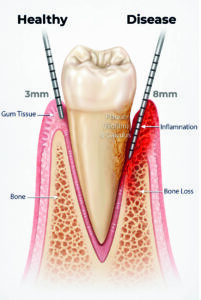
Healthy gums are firm, pink, and fit snugly around the teeth like a protective collar. In this healthy state, the pockets between the teeth and gums are shallow, typically measuring 1–3 mm, making them easier to keep clean. With strong supporting bone and no infection present, healthy gums generally do not bleed during brushing or flossing, helping provide the foundation for a stable, long lasting smile.